
North Texas weather does not always give you a gentle warm-up before summer or a slow slide into winter, and many Frisco homeowners discover the hard way that their AC is not ready on the first 95 degree day or during a sudden cold snap. That first stretch of real heat is usually when systems that seemed fine finally show weak spots. By then, you are competing with everyone else in Frisco who is calling for emergency service.
If you live in a single-family home or small residential property, you are probably trying to avoid that scramble. You want to know what to check in spring and fall so your system can handle long North Texas summers, quick temperature swings, and upstairs rooms that always seem a little warmer. A clear Frisco AC seasonal checklist turns that vague worry into a simple plan you can follow room by room and season by season.
At Quick Solutions Air Conditioning & Heating, we have been working on residential heating and cooling systems across Plano, Frisco, Richardson, Lake Highlands, and Murphy since 2010, with more than 18 years in the HVAC trade. We build our maintenance approach around what we actually see fail in this climate over time, not a generic national script. In this guide, we share the same seasonal thinking we use in our clients’ homes so you can prepare your system before the next weather swing hits.
Why Frisco Homes Need a Seasonal AC Checklist
Frisco sits in a part of North Texas where cooling season stretches beyond a few summer months. Your AC may start running regularly in April and still be cycling in October, and in between those hot stretches, a strong cold front can move through and have you running the heat overnight. That kind of workload is very different from what systems see in milder regions, and it affects how parts wear out and when they fail.
Long runtimes in summer load the outdoor condenser coil with dust, grass clippings, and cottonwood fluff. Indoors, the evaporator coil and blower pull in fine household dust, pet hair, and attic debris through the return side of the ductwork. Electrical parts such as capacitors and contactors work harder and heat up more often, which is why we see so many of them fail in June and July in Plano and Frisco. Drain pans and lines sit full of warm condensate water for months, so algae and buildup have plenty of time to grow and plug things up.
From the outside, none of this is obvious. If the system still blows cold air in May, it is easy to assume it is ready for months of 100 degree days. We see many calls every year from homeowners who skipped spring maintenance because it was cooling fine, only to have a weak capacitor or dirty coil show up as a no-cool situation during the first true heat wave. A seasonal checklist helps you catch early signs of trouble and schedule a tune-up on your terms, before you are without cooling.
That checklist also needs to fit how most Frisco homes are built. Many houses in this area are two stories with a single system or a pair of systems, and they share ductwork that runs through hot attics. We have worked in thousands of those homes since 2010 and have seen the same patterns of hot upstairs rooms, sweating ductwork, and struggling drain lines. The seasonal checks in this guide reflect those real-world patterns, so they are tuned to your neighborhood’s actual conditions, not just manufacturer lab tests.
Spring AC Checklist Before Frisco’s Long Cooling Season
Spring is the time to get ahead of summer. The goal is to make sure your system can start the season clean, correctly charged, and ready to run long cycles when Frisco hits the mid to upper 90s. Some of these tasks are simple checks you can do yourself, and others belong in a professional tune-up visit from a licensed HVAC technician.
On the homeowner side, the first and most effective step is replacing or cleaning your air filter. In many North Texas homes, filters are in the hallway ceiling or at the return grille, and after winter they are often loaded with dust and lint. A restricted filter makes your blower work harder and can contribute to frozen indoor coils once summer humidity rises. While you are at the return, look for furniture, curtains, or décor blocking the return grille or supply vents, and move anything that blocks airflow.
Outside, walk around your condenser unit. Clear leaves, grass, and trash from the top and sides and trim back plants or shrubs so you have at least a couple of feet of clear space around the unit. The metal fins on the condenser coil release heat from your home into the outdoor air, and when they are buried in debris the system has to run longer to do the same job. You should be able to look down and see the fan blades and coil clearly without a layer of buildup on top.
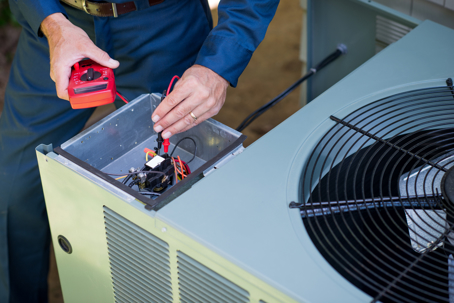
From there, a professional spring tune-up picks up where safe homeowner checks stop. A licensed technician will remove the panel on the outdoor unit and test electrical parts such as capacitors and contactors with a meter, then compare readings to manufacturer ranges. Weak capacitors might still allow the compressor or fan motor to start in April, but once outdoor temperatures hit the high 90s and the system is under full load, they are among the most common failure points we see in Frisco.
Inside, a technician will inspect the evaporator coil and blower assembly, checking for dirt buildup that restricts airflow and insulates the coil. They may take a temperature split reading, which is a measurement of the air temperature going into the system and the air coming out, to see whether the system is removing enough heat. They will also check the condensate drain and pan, looking for early signs of algae or clogs that can cause water leaks later in the season, and verify that electrical connections are tight and wiring shows no obvious damage.
What Frisco Homeowners Can Safely Handle in Spring
As a homeowner, your part of the spring checklist focuses on what you can see and reach safely without opening equipment panels. Filters are the first line of defense. In our experience across Plano, Frisco, and nearby cities, regular filter changes alone prevent a significant number of service calls. Set a reminder to check them monthly during heavy use and at least every three months in milder weather, and write the change date on the filter frame so you can track it.
Thermostat checks are also in your lane. Switch the system to cooling, set a normal temperature, and listen to how the system starts. The indoor blower should come on promptly, and cool air should reach the nearest supply vents within a few minutes. Walk a quick loop through your main living areas and a couple of bedrooms to confirm that air is flowing from all vents and that nothing is blocking them. Clearing toys, rugs, or furniture now can prevent airflow issues when the system is working hardest.
What Your Technician Should Check During a Spring Tune-Up
During a professional visit, you should expect more than someone glancing at your outdoor unit and adding refrigerant without explanation. A thorough spring tune-up in a Frisco home includes checking the refrigerant charge, taking electrical readings on capacitors, checking contactors for pitting or wear, and looking over wiring and connections for heat damage or looseness. These electrical tests require proper meters and training and are not safe DIY tasks.
Our technicians also inspect and, if needed, clean the condenser coil and check the indoor evaporator coil and blower for visible dirt. They verify that the condensate drain is open and flowing and may clear light buildup before it becomes a full clog. Finally, they confirm thermostat operation and control settings, making sure the system responds correctly to changes and that the blower and outdoor unit cycle as they should. At Quick Solutions Air Conditioning & Heating, this is a structured checklist our in-house, licensed, uniformed technicians work through, not a five-minute visit.
Fall AC & Heating Checks Before North Texas Cold Snaps
Because our summers are so dominant, fall maintenance often slides to the bottom of the list in Frisco. The system has just made it through months of heat, so it seems like it has earned a rest. Then the first real cold front moves through, and suddenly the same equipment that cooled your home all summer has to provide heat. If there is a furnace in the attic or closet that has not run since last winter, fall is when small issues can show up as burnt smells, noisy starts, or no-heat calls.
Many North Texas homes use the same indoor air handler and ductwork for both AC and heat. That blower has to move warm air just as reliably as cold air, and if ducts in the attic have developed leaks or kinks during the year, you may notice some rooms struggle to warm up. A fall checklist helps confirm that the equipment and ducts that handled summer cooling are ready for a different type of workload when temperatures dip at night.
On your own, you can start fall checks by looking at filters again and replacing them if they are dirty from the summer run. When you first switch the thermostat to heat, stand near a supply vent and pay attention to how the system behaves. A brief dusty smell in the first few minutes can be normal as the system burns off a bit of settled dust, but a strong burning odor that does not clear or any smoke is a sign to shut it off and call a technician. Listen for banging, grinding, or other unusual sounds as the furnace or heat strips start up.
A technician’s fall visit focuses on safety and reliability for heating. For gas furnaces, this includes checking ignition components, verifying that burners light smoothly, inspecting the flue and vent piping, and testing safety controls that shut the system down if something is wrong. For electric air handlers or heat pumps, it means testing heat strips, checking electrical connections again after a long summer, and confirming that the blower and ducts are delivering heat evenly. The same attention we give to cooling components in spring extends to heating components in fall.
Because cold snaps here can be brief but sharp, you may go from not using heat at all to needing it overnight. Many Plano and Frisco homeowners wait for that first cold night to see what happens. A fall tune-up brings that test forward into a controlled visit, so if a weak ignitor, failing heat strip, or airflow issue is developing, you find it with a technician already on site, not at midnight when the house starts to feel too cold.
Frisco AC Seasonal Checklist: Room‑By‑Room & System Walkthrough
Once you understand the seasonal tasks, it helps to walk through your own home with a simple structure. A room by room check gives you a feel for how your system is actually performing, not just whether the outdoor unit is running. It also gives you concrete observations to share with your technician during a maintenance visit, which makes it easier to target comfort problems.
Start at the thermostat. Make sure it is level on the wall and not blocked by furniture, lamps, or décor, and check that it is not in the direct path of a supply vent. Thermostats that sit in a hot hallway or receive direct sunlight can make your system run longer than needed. Confirm that the display is clear and easy to read, the schedule matches your current routine, and you know how to switch between heating, cooling, and fan modes as seasons change.
Next, walk through your main living areas and bedrooms. Stand under or near each supply vent and check for steady airflow. In many two-story Frisco homes, upstairs rooms naturally run warmer in summer, but pay attention to any room that is much hotter or colder than the rest. That can indicate a duct issue, a closed or blocked vent, or a room that needs attention during your tune-up, such as adding a return grille or making simple balancing adjustments.
Take a quick look at return locations too. Returns should not be blocked by large furniture, bookcases, or wall hangings. When returns are starved for air, the system struggles to pull in enough air, which can lead to noise, poor airflow at supplies, and even coil freeze in extreme cases. If you have pets, note any areas with heavy fur accumulation, because that often points to where filters or duct seals are under strain.
As you move, jot down anything you notice, such as rooms that always feel stuffy, vents that seem weak, or noises you hear when the system starts or stops. At Quick Solutions Air Conditioning & Heating, we build time into maintenance visits to go through this kind of list with homeowners, because your daily experience in the home tells us as much about system performance as a gauge reading or temperature measurement. Bringing both your observations and this checklist to your seasonal tune-up lets us focus the visit on what matters most to your comfort.
How Seasonal Tune-Ups Help Avoid Common North Texas Breakdowns
We see clear patterns in the types of breakdowns that happen around Plano, Frisco, Richardson, Lake Highlands, and Murphy each year. When the first real heat wave hits, calls for failed capacitors, clogged drain lines, and frozen indoor coils often jump. Most of these issues start as small, manageable problems in spring that only turn into complete failures once outdoor temperatures climb and the system has to run long, continuous cycles.
Capacitors are a good example. These small electrical components store and release energy to help motors and compressors start. Over time and many hot starts, their capacity slowly drops. A capacitor that is a bit weak might still allow the system to start on a mild April afternoon, so everything seems fine. Once June arrives and the compressor faces full heat load, that same weak capacitor may no longer do its job, and the unit may hum without starting or shut down completely. A spring tune-up that includes electrical testing can spot those weak readings and replace the part on your schedule.
Dirty evaporator coils and restricted airflow follow a similar pattern. When dust and debris coat the indoor coil, air cannot pass through as easily, and heat transfer suffers. The system needs longer runtimes to pull down the temperature, which drives up energy use and wears on parts. In high humidity, reduced airflow can let the coil get so cold that it freezes over, blocking airflow completely. During a seasonal visit, a technician can catch early signs of buildup and address them before you end up with a frozen coil and no cooling on a peak day.
Drain problems build quietly during our long cooling season. As your AC removes moisture from indoor air, water collects in a pan and flows out through a small drain line. Warm, wet conditions make ideal conditions for algae and slime, which can narrow or block that line. Often the first sign is water dripping in the attic, staining ceilings, or a safety float switch shutting the system down. Part of our seasonal checklist is inspecting and flushing that drain line so you are less likely to encounter those surprises in midsummer.
When Seasonal Maintenance Reveals Bigger Repair or Replacement Needs
Sometimes a seasonal tune-up does more than clear small problems. As systems age, there comes a point where repeated repairs, visible corrosion, or very low efficiency make it clear that a bigger decision is coming. Our seasonal checklist is designed not only to help keep your current system running as reliably as its age allows, but also to give you an honest picture of its condition so you can plan ahead.
Signs that a system is nearing the end of its practical life often include major components already replaced more than once, heavy rust or deterioration on the outdoor unit, and recurring issues like refrigerant leaks or motor failures. Comfort and cost matter too. If your Frisco home still has uneven temperatures and high energy bills even after coils are cleaned and airflow is addressed, that may point to a system that is simply not keeping up with current demands or efficiency expectations.
When we see those patterns during a seasonal visit, we do not flip straight to pressure tactics. Instead, we explain what we are seeing, how long we reasonably think the system might continue with repairs, and what a replacement path would look like. Quick Solutions Air Conditioning & Heating provides free in-person estimates for new systems and major repairs, with clear written scopes you can review at your own pace. We also offer financing options for qualifying jobs, laid out in simple terms so you can understand payment schedules without sorting through complex documents alone.
Even if replacement is on the horizon, ongoing seasonal maintenance still has value. It helps your current system run as safely and steadily as its design and age allow while you plan your next step, instead of leaving you at higher risk for a complete failure during the hottest or coldest part of the year. Many families we have worked with over the last decade in Plano and Frisco have used this approach across more than one home, scheduling tune-ups to monitor older units while they budget and plan replacements on a realistic timeline.
Plan Your Next Seasonal Tune-Up With a Frisco-Focused Checklist
A clear, Frisco-focused seasonal AC checklist gives you more control over how your system handles North Texas weather. By pairing simple homeowner checks with a structured professional tune-up in spring and fall, you can reduce the chance of surprise breakdowns, keep comfort steadier from room to room, and understand what is happening inside your equipment long before it fails. The goal is fewer urgent calls and more measured decisions about repair and replacement.
If you are ready to put this checklist into action, we can walk through it with you. At Quick Solutions Air Conditioning & Heating, our residential maintenance visits follow this same seasonal logic, shaped by years of work in Plano, Frisco, Richardson, Lake Highlands, Murphy, and the wider Dallas Metroplex. Contact us to schedule a spring or fall tune-up that matches the way your home is built and the way our climate really behaves, not just how it looks on paper.